
Portfolio

Texas Child Care Licensing in Practice
A digital learning experience for regulatory practice and professional judgment
Texas child-care licensing requires staff to apply detailed standards across daily routines, documentation and professional judgment. I designed this orientation for a licensed Texas child-care center, working with the center director as subject matter expert to translate an overview of the Texas Minimum Standards for Child-Care Centers and the center’s operational policies into structured instruction, realistic scenarios and practical job aids. Built in Articulate Rise 360 for phone, tablet and desktop use, the experience combines hosted instructional video, accessible custom interactions, downloadable performance support and form-based orientation documentation without an LMS.
Design choices focused on organizational and learner needs:
- Organized regulatory content into a sequence that supports understanding and recall
- Combined responsive Rise lessons with video, downloadable job aids and HTML, CSS and JavaScript interactions designed toward WCAG 2.1 AA
- Used story-based scenarios, open navigation and performance support to connect procedural requirements with professional judgment
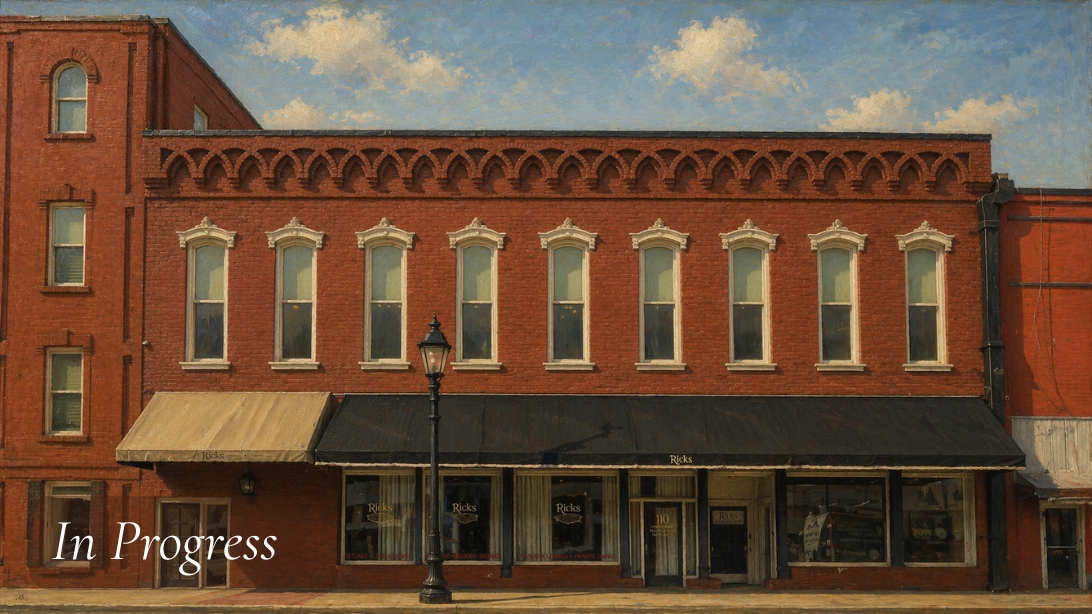
Texas Heritage Site: The Heard Opera House
A QR-accessible, AR-adjacent spatial learning experience
When people visit historic buildings, it can be hard to envision how people really interacted in the space. Reading static information posted on walls can be hard to connect with how people worked and moved in the environment. I am designing a QR-accessible, AR-adjacent prototype in Articulate Rise, chosen for its mobile-responsive format and suitability for visitors accessing this digital learning experience on their phones. Through sound, visual reconstruction, movement and guided attention, the experience invites learners into a reconstruction of the opera house as it was inhabited in 1896, drawing on archival sources and collaboration with a restoration architect.
Design choices focused on learner experience:
- Working with a restoration architect as subject matter expert
- Choosing Articulate Rise for mobile-responsive, QR-code access
- Using layered sound and visual reconstruction
- Structuring the experience from street to arrival to lobby to hall
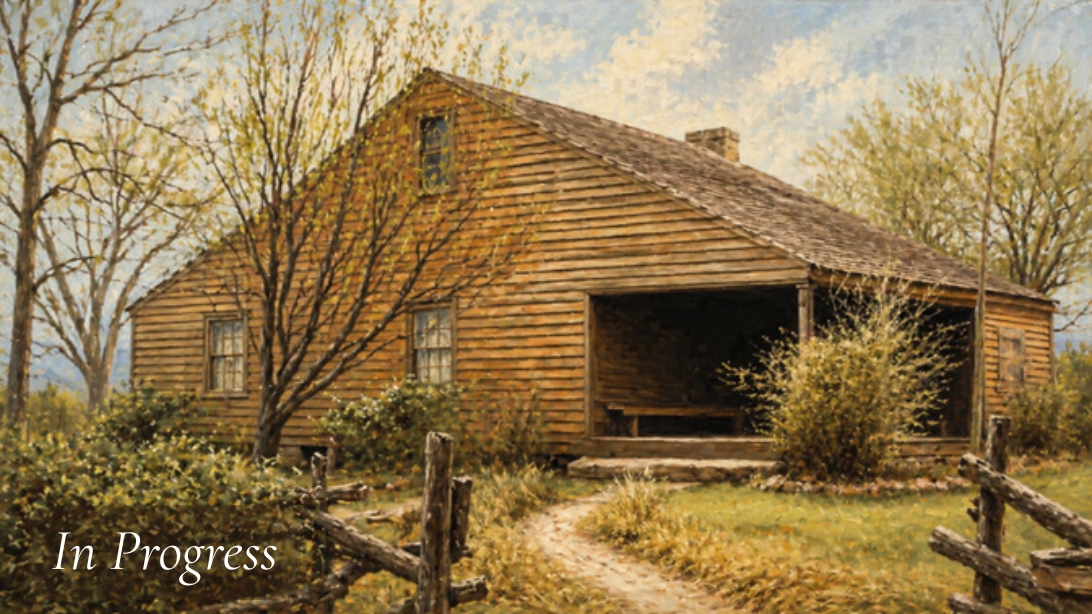
Texas Heritage Site: The Collin McKinney Homestead
A QR-accessible, AR-adjacent spatial prototype for historical inquiry
Visitors to historic sites may encounter a preserved structure without knowing how to read it as evidence. I am designing this browser-based spatial prototype to help city stakeholders, preservation partners and future visitors understand the Collin McKinney Homestead as a material record of early North Texas settlement. Using a simplified 3D model and AR-adjacent approach, the prototype guides learners to observe the whole structure, then selected architectural details, helping them connect features to decisions shaped by survival, economy, durability and community formation.
Design choices focused on learner experience:
- Choosing a browser-based, AR-adjacent format for feasible review and testing
- Organizing the experience around the SME’s “pattern of decision making”
- Structuring the learner pathway from the whole structure to selected architectural details
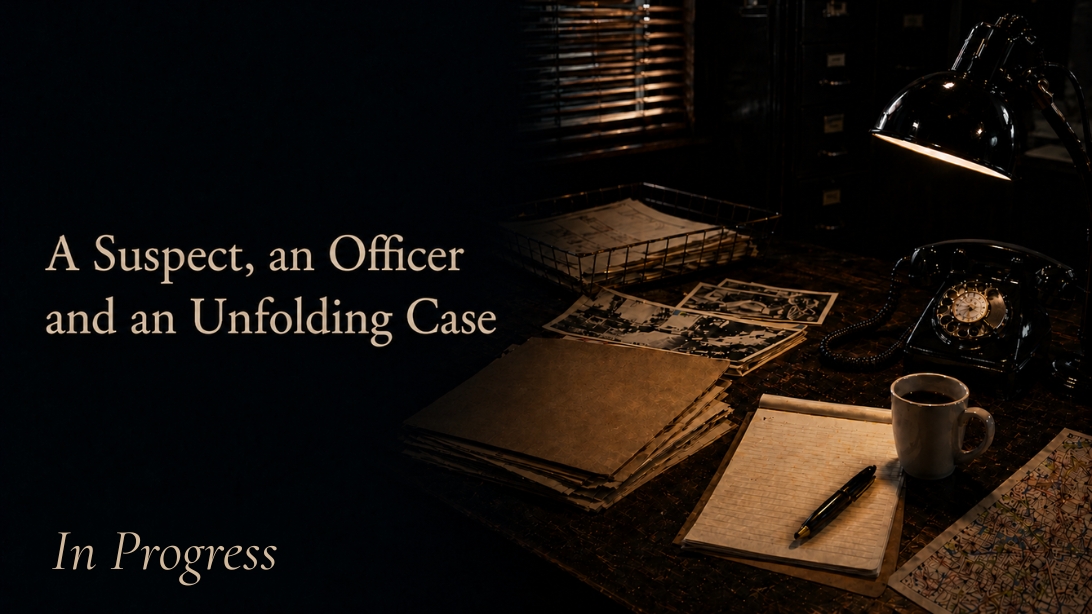
Archival Learning Experience Prototype
For visitors to the Dallas Police Museum
Visitors to the Dallas Police Museum may arrive knowing the names, images and outcomes connected to President Kennedy’s assassination. This Articulate Storyline prototype begins before the case has entered public memory as a fixed historical event. Drawing from an archival interview with Detective Jim Leavelle as the central primary source, the experience guides visitors through a controlled sequence of reveals so they can notice how investigative judgment forms under conditions of incomplete knowledge.
Design choices focused on learner experience:
- using an archival interview as primary source
- choosing Articulate Storyline for controlled disclosure
- including communication practices from 1963 to clarify how payphones, AM radios, limited computer access and monitored police channels shaped investigative work
Multimedia Pilot
Developing the infrastructure for multimedia scholarship within Visions of Research in Music Education (VRME), for authors, reviewers and readers of peer-reviewed music education research
As academic publishing is undergoing a shift in how scholarship is produced, received and circulated, the VRME Editorial Board is responding by beginning to consider audio, video and interactive forms. Since its current model is built for the 20-page article and does not yet have the infrastructure to support these forms, this pilot addresses a gap by developing a system for submission, peer review and publication of multimedia scholarship.
Design choices focused on system and infrastructure:
- Developing a companion model in which multimedia elements extend a primary article, allowing new forms to enter without displacing the existing structure
- Using Articulate Rise to prototype how short-form and multimedia scholarship might be organized, presented and navigated in relation to peer-reviewed work
- Separating repository and presentation layers, using Digital Commons for publication and externally hosted media for access and interaction

Press Play Music Day
Digital learning assets for elementary music education
Press Play Music Day is a collection of digital learning assets for young children, designed to support musical participation through story, song, image, movement and structured interaction. These assets help teachers and substitutes invite children into musical engagement without requiring specialist facilitation.
Design choices focused on learner experience:
- Used story, character, image and narration to support young learners’ attention
- Designed for adult-guided use in music classroom or substitute settings
- Extended screen-based learning through singing, movement, discussion or guided activities